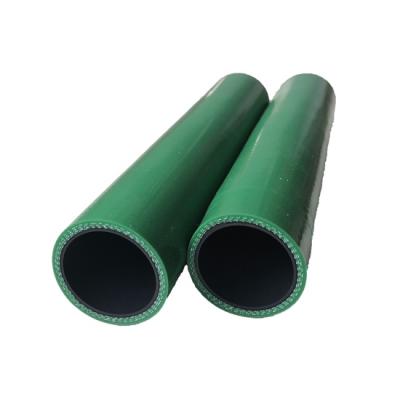
Toyota's recent fuel cell truck collaborations with Scania and IVECO mark a meaningful step toward real-world validation of hydrogen heavy-duty transport, with structured fleet trials planned for 2027—though full commercial deployment remains a longer-term objective. For vehicle component suppliers and B2B buyers, the more important question is not only how the fuel cell stack performs, but whether the surrounding air, coolant, and fluid-management systems can deliver long-term reliability under commercial-truck conditions.
In a fuel cell truck, hoses are part of a wider system that manages heat, air flow, and, in selected locations, hydrogen-related media. Their function goes beyond connecting two components. They must maintain flow, sealing, flexibility, and material stability throughout repeated thermal cycles, vehicle vibration, pressure changes, and long operating hours.
Heavy-duty vehicles create a particularly demanding environment. Compared with many passenger-vehicle applications, trucks may operate for longer daily hours, experience higher cumulative vibration, carry greater loads, and face wider ambient-temperature changes. Packaging space around stacks, compressors, pumps, heat exchangers, and chassis components may also be limited. As a result, hose routing, bend radius, reinforcement, wall thickness, end connections, and abrasion protection all need to be considered during development.
1. Coolant Hoses: Thermal Management and Material Compatibility
Fuel-cell stacks and related power electronics generate heat that must be controlled to maintain stable system operation. Coolant hoses may connect stacks, pumps, heat exchangers, valves, and other thermal-management components.
For these applications, buyers should assess more than the nominal temperature range. Important factors include coolant compatibility, temperature cycling, working pressure and pressure pulses, flexibility at low temperature, resistance to vibration, and dimensional stability at connection points.
Where a cooling circuit uses deionized water or a low-conductivity coolant, materials should also be evaluated for extractables. Depending on the hose compound and system specification, substances released from wetted materials can affect coolant conductivity or contaminate sensitive components. This is why material selection and application-specific validation are important for fuel-cell coolant hose systems.
2. Air-Management Hoses: Flexibility, Heat Resistance, and Routing
Fuel-cell air systems may include connections between air compressors, cathode-side components, humidification equipment, and intake or outlet sections. These hoses may operate near heat-generating components and within tight vehicle packaging zones.
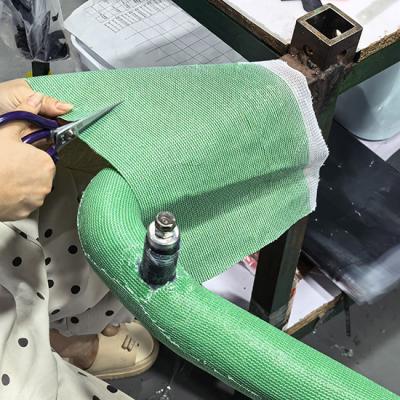
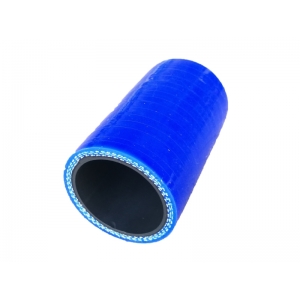
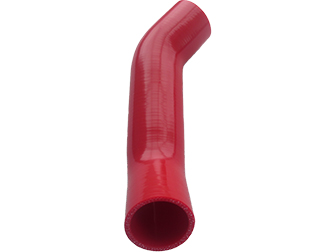
Silicone hose can be considered where flexibility, temperature resistance, ozone resistance, and custom molded geometry are required. Reinforcement may be needed where the circuit has pressure or vacuum demands. However, the correct construction should be selected based on the actual system layout, air temperature, pressure conditions, connection method, and required service life.
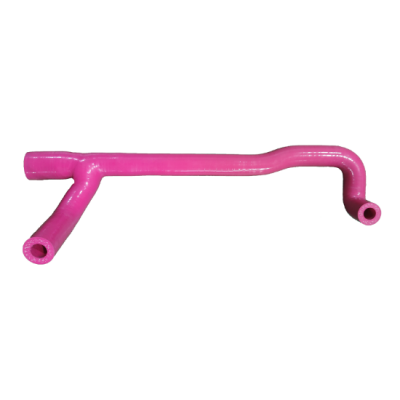
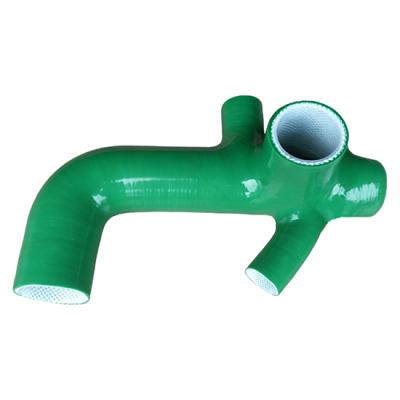
For molded hose designs, even small changes in bend angle, leg length, wall thickness, or hose diameter can affect installation and long-term stress at the joint. Early review of 2D drawings, 3D data, or physical samples can reduce fitment issues during prototype and validation stages.
3.Hydrogen-Related Lines: Do Not Treat Every Hose as a Hydrogen Hose
Hydrogen-related circuits require separate engineering evaluation. A hose designed for air or coolant service should not automatically be used for hydrogen service, especially where pressure, permeation, sealing, fittings, and safety requirements are more demanding.
For any hydrogen-contact application, buyers should confirm the medium, operating pressure, temperature range, pressure cycling, permeation expectations, end-fitting design, and the specific applicable project or regulatory requirements. High-pressure compressed-hydrogen hose assemblies require a different level of validation from standard silicone coolant or air hoses. The public scope of CSA/ANSI HGV 4.2, for example, addresses safety requirements for compressed gaseous-hydrogen hose and hose assemblies in defined fueling-station, dispenser, and vehicle-fuel-system applications.
4.Heavy-Duty Durability Depends on the Complete Hose Design
Hose durability is not determined by the base material alone. In commercial-vehicle use, performance depends on the full construction and installation environment.
Key considerations include:
The conveyed medium and chemical-compatibility requirements
Continuous and peak operating temperatures
Working pressure, pressure pulses, and required burst-pressure margin
Reinforcement material, ply count, wall thickness, and dimensional tolerances
Bend radius, routing, clamp position, abrasion exposure, and nearby heat sources
End connections, sealing interfaces, and assembly method
Target service life, validation cycle, and traceability requirements
A silicone hose with the right temperature rating may still fail prematurely if the reinforcement, routing, clamp design, bend radius, or connector interface is not suitable for the vehicle’s actual operating conditions.
5.Information Needed for Fuel Cell Hose Selection
To speed up technical evaluation and quotation, B2B buyers should share:
The hose function: coolant, air, hydrogen-related, or another auxiliary circuit
Conveyed medium and any purity or low-extractables requirements
Temperature range, working pressure, pressure-pulse data, and target life
Hose ID, OD, length, wall thickness, bend geometry, and installation space
Drawings, 3D files, samples, or photos of the installed assembly
Required reinforcement, lining, flame-performance, or abrasion-protection needs
Fittings, clamps, quick connectors, sealing requirements, and applicable standards
Prototype quantity, estimated annual volume, and target project timing
As fuel cell truck programs move toward real-world operation, vehicle hose systems need to be selected as engineered components rather than generic replacement parts. The most suitable construction depends on the circuit, medium, operating conditions, routing design, and validation requirements.
SUNRISE develops custom silicone hose solutions for automotive and commercial-vehicle applications, including reinforced straight hose, molded hose, reducer hose, and selected lined constructions. For a project review, buyers can share their drawing or sample together with operating conditions, target standards, and estimated quantity. Our team can then evaluate feasible hose constructions and provide a quotation based on the actual application.