Choosing a reliable custom silicone hose manufacturer in China involves more than comparing quotations. For industrial buyers, automotive suppliers, equipment manufacturers, and distributors, the right manufacturing partner must understand application requirements, recommend suitable materials, produce accurate hose configurations, and maintain consistent quality across orders.
Custom silicone hoses are often designed for specific operating conditions, including high temperatures, pressure fluctuations, vibration, chemical exposure, and limited installation space. A supplier that only offers standard hose sizes may not be able to meet these requirements.
So, how can buyers identify a dependable custom silicone hose manufacturer? This guide explains the key factors to evaluate, from manufacturing experience and material selection to quality control, customization capabilities, and sample validation.
Before contacting a silicone hose supplier, define how the hose will be used. The application determines the required silicone compound, reinforcement structure, dimensions, and performance specifications.
For example, an automotive coolant hose has different requirements from a food processing hose or a vacuum connection. Selecting a manufacturer with relevant application experience can help prevent material mismatches and unnecessary redesigns.
Temperature is one of the first factors to confirm. Buyers should provide the normal operating temperature, peak temperature, and expected exposure time. Pressure and vacuum conditions should also be specified, particularly for hoses used in engine compartments, fluid transfer systems, and industrial equipment.
Other important operating conditions include:
These details help the manufacturer determine whether standard silicone construction is sufficient or whether additional reinforcement or a specialized inner lining is necessary.
Custom silicone hose production requires accurate dimensional information. Buyers should provide the inner diameter, outer diameter, wall thickness, overall length, bend radius, and connection dimensions whenever possible.
For shaped hoses, a technical drawing or physical sample is particularly useful. It allows the manufacturer to evaluate the hose routing, bend angles, connection positions, and potential interference with surrounding components.
For complex applications, SUNRISE can manufacture custom silicone hoses based on customer drawings or samples, including used hoses and handmade prototypes. This provides a practical starting point for developing replacement hoses or application-specific designs.
A reliable custom silicone hose manufacturer should be able to explain how different hose structures are produced and which construction is suitable for a particular application. Customization is not simply changing the hose length or color. It may involve material formulation, reinforcement layers, molded geometry, and integrated connection components.
SUNRISE Silicone Hose Co., Limited has supplied performance silicone hoses and molded silicone products since 2006. Its product range covers automotive, railway, marine, healthcare equipment, electronics, and other industrial applications.
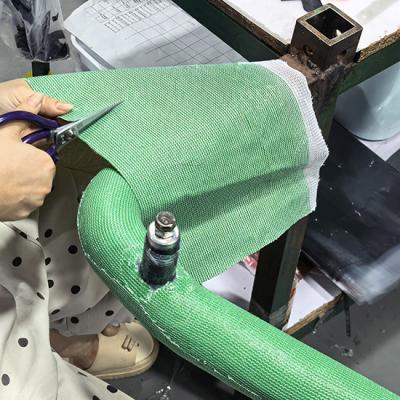
Reinforcement affects a silicone hose's pressure resistance, flexibility, dimensional stability, and resistance to collapse. The appropriate structure depends on the working environment rather than simply the number of reinforcement layers.
For example, SUNRISE offers wire reinforced silicone hoses for vacuum applications. Its reinforced constructions also include multi-layer braided silicone hoses for applications requiring additional structural support.

Not every silicone hose is a straight tube. Automotive and industrial systems often require elbows, reducers, hump hoses, corrugated sections, or specially routed assemblies.
Some designs also incorporate aluminum or stainless steel couplers to connect the hose directly to other system components. These designs require coordination between hose geometry, connection dimensions, and assembly requirements.
When reviewing a supplier's portfolio, look for examples of custom silicone hose manufacturing rather than relying only on standard product photographs. SUNRISE provides custom hose configurations and can manufacture silicone hoses with metal inserts for specific applications.
The silicone material must match the actual media and operating environment. A hose suitable for hot air or coolant circulation is not automatically suitable for fuel, oil, or chemical transfer.
Buyers should ask manufacturers to identify the proposed silicone compound, lining material, reinforcement, and relevant test documentation before confirming an order.
Different applications may require different silicone constructions:
For fuel-related and chemically demanding applications, buyers can review Viton-lined silicone hose solutions and confirm the compatibility of the lining with the actual fluid.
Certifications provide useful evidence of a manufacturer's quality management system, but buyers should understand what each certificate actually covers.
For automotive supply chains, ISO 9001 and IATF 16949 are important quality management references. For food-contact products, relevant requirements may include FDA 21 CFR 177.2600, LFGB, and Regulation (EC) No. 1935/2004, depending on the intended market and application.
Other specifications may apply to particular products, including SAE J20 for coolant hoses, SAE J30 for fuel and oil hoses, and EN 45545-2 for railway fire protection applications.
A professional supplier should be able to clarify which standards apply to the requested product and provide relevant documentation. Buyers should also check the certificate holder, scope, validity, and whether the actual material or finished hose has supporting test evidence.
Product photographs and technical descriptions cannot fully demonstrate manufacturing consistency. Before placing a production order, buyers should understand how the manufacturer checks dimensions, appearance, material properties, and finished hose performance.
A dependable supplier should be willing to discuss prototype development and first-article validation. The sample should be checked against the approved drawing and actual application requirements.
Depending on the hose design, validation may include:
For custom projects, the approved sample should become the reference for subsequent production. Any changes to the material, reinforcement, dimensions, or manufacturing process should be reviewed before implementation.
For repeat orders, consistency is just as important as the first approved sample. Buyers should ask whether the manufacturer maintains production specifications, inspection records, and material identification procedures.
Useful questions include:
These details are especially important for automotive and industrial buyers who need stable product performance across repeated orders.
Price is an important purchasing factor, but the lowest quotation does not always represent the lowest total procurement cost. Material selection, reinforcement layers, tooling requirements, inspection standards, and shipping arrangements can all affect the final cost.
Before comparing quotations, make sure each supplier is pricing the same technical specifications.
MOQ varies according to the manufacturing process and product type. For example, SUNRISE lists a minimum order quantity of 10 pieces per item for silicone hoses on its product listing, while extruded silicone tubing and profiles have a listed MOQ of 100 meters per item. First articles for validation are also acceptable.
These figures provide a useful reference, but the final MOQ should be confirmed for the specific design, material, and production requirements.
Ask for a realistic schedule covering drawing review, material confirmation, sample production, sample approval, mass production, and shipment. A clear timeline helps purchasing teams coordinate their own production plans.
Communication is another important indicator. A capable manufacturer should be able to explain technical limitations, identify missing specifications, and discuss possible design adjustments rather than simply accepting every request without review.
SUNRISE Silicone Hose Co., Limited is a China-based manufacturer specializing in performance silicone hoses, silicone tubing, and molded silicone products. The company has been manufacturing these products since 2006 and serves customers in automotive, railway, marine, healthcare equipment, electronics, and other industrial sectors.
Its product range includes:
SUNRISE states that it holds ISO 9001 and IATF 16949 certifications. Its customization service accepts customer drawings and physical samples, allowing buyers to discuss product development based on actual application requirements.
For projects involving reinforced coolant connections, buyers can also explore the available 2-ply reinforced silicone hose range to understand how braided reinforcement is used in different hose constructions.
The suitability of any product should still be confirmed against the buyer's operating conditions, technical drawings, and required compliance documents.
Providing complete technical information helps manufacturers evaluate feasibility and prepare more accurate quotations. If a drawing is not available, a physical sample, photographs, and basic measurements can be a useful starting point.
When contacting a custom silicone hose manufacturer, prepare the following information:
With these details, the manufacturer can assess the design, recommend a suitable construction, and determine the next steps for sampling and production.
To discuss a custom project, contact SUNRISE Silicone Hose Co., Limited through the website or send your drawing and sample details to sales@siliconehose-china.com.
Evaluate the manufacturer's industry experience, customization capabilities, material knowledge, quality management certifications, sample validation process, and ability to meet your technical specifications. Ask for relevant product examples and supporting documentation before placing a production order.
Yes. SUNRISE accepts customer drawings and physical samples, including used hoses and handmade prototypes, as references for custom silicone hose development. The design and production feasibility should be confirmed after technical review.
SUNRISE lists an MOQ of 10 pieces per item for silicone hoses, with first-article validation acceptable. The actual order quantity should be confirmed according to the hose design and manufacturing requirements.
Depending on the application, silicone hoses can use polyester, aramid, fiberglass, or wire reinforcement. The appropriate structure depends on pressure, vacuum, temperature, flexibility, and installation requirements.
ISO 9001 and IATF 16949 are relevant quality management system certifications to review, particularly for industrial and automotive supply chains. Product-specific requirements may also include SAE, FDA, LFGB, or railway standards. Always verify the applicable scope and supporting test documentation.
Standard silicone is generally not suitable for direct contact with many fuels and oils. A compatible lining, such as fluorosilicone or another specified material, may be required. Buyers should confirm fluid compatibility with the manufacturer before selecting a hose.
Provide a technical drawing or sample, hose dimensions, operating temperature, pressure requirements, transferred media, reinforcement preferences, quantity, and applicable standards. Complete information helps the manufacturer evaluate the design and provide a more accurate quotation.

Sunrise Silicone Hose Co., Limited


Address : Suite 805, No. 341 Jiahe Road, Xiamen City, Fujian Province, China
Email : sales@siliconehose-china.com