Silicone tubing and silicone hoses are widely used in automotive systems, industrial equipment, food processing machinery, and other applications where flexibility, temperature resistance, and reliable fluid or air transfer are required. However, not all silicone hoses are manufactured in the same way. The production method directly affects the product's shape, dimensions, structural design, and suitability for different operating conditions.
Two common manufacturing methods are silicone extrusion and silicone molding. Extruded silicone tubing is generally designed for continuous lengths and consistent cross-sectional profiles, while molded silicone hoses are better suited to complex geometries, bends, and application-specific connections.
So, what is the difference between extruded silicone tubing and molded silicone hose? More importantly, which manufacturing method should buyers choose for their projects? This guide explains their manufacturing processes, performance characteristics, applications, and key purchasing considerations.
Extruded silicone tubing is produced by forcing uncured silicone rubber through a specially designed extrusion die. The material passes through the die continuously, forming a tube or profile with a consistent cross-sectional shape. It is then cured and processed into the required length.
Because extrusion is a continuous manufacturing process, it is particularly suitable for producing long silicone tubes with uniform internal and external diameters. Depending on the material formulation and production requirements, extruded tubing can also be manufactured in different colors, wall thicknesses, and dimensions.

The extrusion process typically involves several production stages:
This manufacturing method is suitable for applications requiring consistent tubing dimensions and continuous production. For example, SUNRISE supplies custom extruded silicone tubing in different colors and dimensions for industrial and other specialized applications.
A molded silicone hose is manufactured by placing silicone rubber into a specially designed mold and forming it under controlled processing conditions. Depending on the product design and material, manufacturers may use compression molding, transfer molding, or injection molding processes.
Unlike extrusion, molding allows manufacturers to produce hoses with more complex three-dimensional geometries. These may include curved sections, bends, branches, varying diameters, and specially designed connection structures.
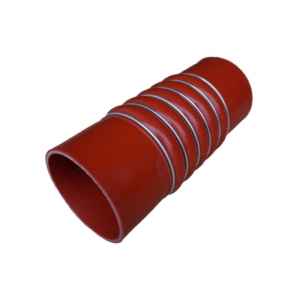
The manufacturing process generally includes the following stages:
For automotive applications, molded silicone hoses can be designed with specific bends and connection points to fit limited engine compartment spaces. SUNRISE manufactures custom molded silicone radiator and heater hoses, with polyester or aramid reinforcement options depending on application requirements.
Although both products use silicone rubber as their main material, their manufacturing methods create important differences in geometry, production setup, and application suitability.
| Comparison | Extruded Silicone Tubing | Molded Silicone Hose |
|---|---|---|
| Manufacturing method | Continuous extrusion | Compression, transfer, or injection molding |
| Product geometry | Consistent cross-section | Complex three-dimensional shapes |
| Length | Continuous production, cut to length | Defined by mold design |
| Design flexibility | Best for constant profiles | Better for bends and complex structures |
| Tooling | Extrusion die | Product-specific mold |
| Typical applications | Tubing, vacuum lines, insulation, and sealing | Automotive coolant systems, intake connections, and custom hose assemblies |
| Production considerations | Suitable for continuous production runs | Requires mold development and product-specific setup |
One important point is that the manufacturing method alone does not determine the final hose performance. Pressure resistance, temperature range, flexibility, and service life also depend on silicone formulation, wall thickness, reinforcement structure, curing quality, and actual operating conditions.
The best choice depends on the function of the hose and the requirements of the equipment. A simple straight connection may not require a molded design, while a hose that must follow a specific installation route may need a custom mold.
Extruded silicone tubing is commonly selected when the application requires continuous tubing, consistent dimensions, and flexible cutting lengths.
For industrial projects requiring consistent tubing dimensions, buyers can explore industrial silicone tubing solutions to identify suitable products based on the intended medium, temperature, and installation conditions.
Molded silicone hoses are particularly useful when standard straight tubing cannot meet the required installation geometry or connection requirements.
For applications involving demanding vacuum conditions, embedded wire reinforcement may be considered to help prevent hose collapse. Depending on the design, specialized silicone hose products can provide additional construction options for different operating environments.
There is no universal answer because the overall cost depends on product geometry, order quantity, tooling requirements, material specifications, and quality inspection standards.
Extruded silicone tubing generally does not require a complex product-specific mold. Once the extrusion die and production parameters are established, manufacturers can produce continuous tubing and cut it to the required lengths. This makes extrusion a practical option for standard profiles and projects requiring regular production quantities.
Molded silicone hoses require dedicated tooling based on the product's shape and dimensions. The initial mold development cost can be higher, particularly for complex designs. However, molding may be the more practical solution when the product needs precise bends, multiple connection points, or a geometry that cannot be achieved through conventional extrusion.
For B2B buyers, the right comparison should consider total project cost rather than unit price alone. Tooling investment, production volume, assembly requirements, inspection costs, and long-term product consistency should all be included in the purchasing decision.
Choosing the right manufacturing partner is just as important as selecting the production method. A capable silicone hose manufacturer should understand the application requirements and recommend an appropriate process instead of simply offering a standard product.
Ask whether the supplier has experience in silicone extrusion, molded silicone hose production, and custom product development. If your project involves both straight tubing and complex hose assemblies, a manufacturer with multiple processing capabilities can make product development easier.
Technical drawings and existing hose samples help manufacturers understand the required dimensions, bending angles, connection positions, and installation space. If the original drawing is unavailable, a physical sample or prototype can provide a useful starting point for custom development.
Before placing an order, confirm the operating temperature, working pressure, vacuum conditions, media compatibility, hardness, and required reinforcement. For automotive projects, relevant specifications such as SAE J20 may apply to certain coolant and heater hose applications. For food-contact products, applicable material and regulatory requirements should be confirmed separately.
Manufacturing certifications, material traceability, dimensional inspection, and application-specific testing all contribute to supplier evaluation. SUNRISE has been manufacturing silicone hoses and molded silicone products since 2006 and holds ISO 9001 and IATF 16949 certifications. These systems support its manufacturing and quality management processes.
As an experienced silicone hose manufacturer, SUNRISE supports customized products based on customer drawings or physical samples. Buyers can discuss product geometry, material selection, and manufacturing requirements with the technical team before confirming a production solution.
Different industrial projects require different silicone hose constructions. Some applications need continuous tubing with stable dimensions, while others require specially shaped hoses to fit complex equipment layouts.
SUNRISE SILICONE HOSE CO., LIMITED has specialized in silicone hoses, extruded profiles, and molded silicone products since 2006. Its product range covers automotive, railway, marine, industrial equipment, healthcare, and other applications.
Depending on project requirements, SUNRISE can provide:
For projects involving unique hose shapes, non-standard dimensions, or specific operating conditions, the engineering team can evaluate the design and recommend an appropriate manufacturing method.
Whether you need extruded silicone tubing for continuous fluid transfer or molded silicone hoses for complex automotive connections, contact SUNRISE to discuss your specifications and request a customized solution.
The main difference is the manufacturing process and resulting geometry. Extruded silicone tubing is produced continuously with a consistent cross-section, while molded silicone hose is formed in a mold and can have complex bends, branches, and customized three-dimensional shapes.
Yes. Silicone extrusion can produce tubing for high-temperature applications. However, the actual operating temperature range depends on the silicone formulation, curing process, and product specifications. Buyers should confirm the manufacturer's rated temperature range before use.
Yes. Depending on the design, molded silicone hoses can incorporate reinforcement materials such as polyester or aramid. The appropriate reinforcement depends on pressure, temperature, flexibility, and other application requirements.
Both processes can be used in automotive applications. Extruded tubing is suitable for straight connections and consistent profiles, while molded silicone hoses are generally more suitable for complex routing, bends, and customized engine connections.
Yes. Manufacturers such as SUNRISE can develop customized silicone hoses based on customer drawings or physical samples. The sample helps determine dimensions, geometry, connection positions, and other design requirements.
Extrusion can be more economical for continuous tubing and standard profiles because it generally requires less complex product-specific tooling. Molding involves mold development costs but may be necessary for complex hose geometries. The most cost-effective option depends on design complexity and order volume.

Sunrise Silicone Hose Co., Limited


Address : Suite 805, No. 341 Jiahe Road, Xiamen City, Fujian Province, China
Email : sales@siliconehose-china.com