In automotive and industrial systems, a silicone hose sometimes needs to do more than transfer air, coolant, or other media. It may also need to connect directly to a metal component, fit into a restricted installation space, or match a specific equipment interface. In these situations, a custom silicone hose with aluminum or stainless steel inserts can provide a more integrated connection solution.
SUNRISE manufactures custom silicone hoses with metal components, including aluminum and stainless steel couplers. By combining silicone rubber with metal parts during the hose curing process, the manufacturer can produce integrated hose assemblies designed around specific installation and connection requirements.
This article explains how metal inserts work in silicone hoses, the differences between aluminum and stainless steel components, their applications, and the information buyers should prepare when requesting a custom solution.
A silicone hose with metal inserts is a specially manufactured hose that incorporates a metal connection component into its silicone rubber structure. Instead of relying entirely on separate connectors, the hose can be designed with an aluminum or stainless steel component integrated into the assembly.
During manufacturing, the silicone material is formed around the metal component and grips it during the curing process. This creates an integrated structure that can simplify the connection between the hose and other system components.
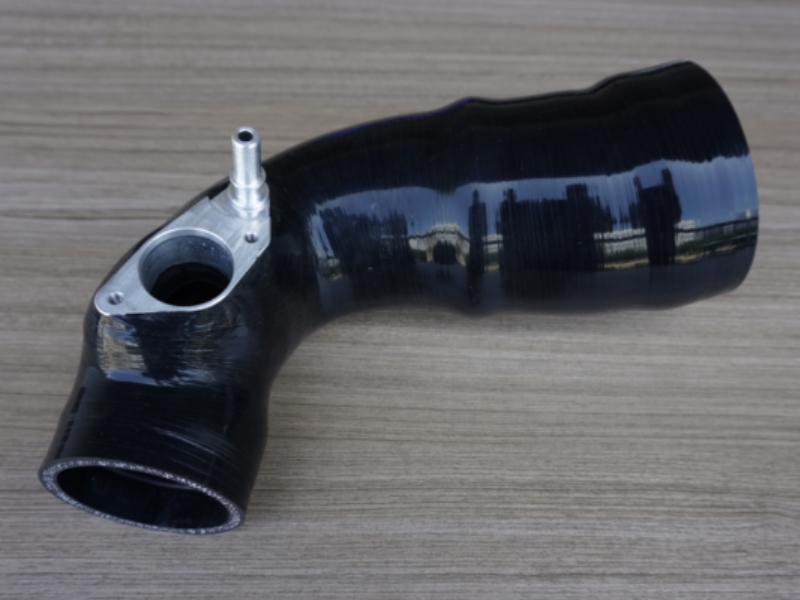
This construction is particularly useful when conventional hose connections are difficult to accommodate. For example, an automotive assembly may require a specific mounting position, a shaped hose body, and a metal connection interface within a limited installation space.
For projects requiring this type of construction, SUNRISE provides custom silicone hoses with aluminum and stainless steel inserts according to customer requirements.
Aluminum and stainless steel are both available for metal components integrated into custom silicone hoses. The right choice depends on the application, connection design, operating environment, and overall assembly requirements.
Aluminum is a practical option for applications where a lightweight metal connection component is preferred. Its relatively low weight can be beneficial in vehicle assemblies and equipment where component mass and installation space need to be considered.
Aluminum inserts may be suitable for:
The final design should consider the insert dimensions, connection geometry, mechanical loading, and compatibility with the operating environment.
Stainless steel is another option for applications that require a metal component with good corrosion resistance and mechanical strength. It can be considered for assemblies exposed to moisture, demanding operating environments, or specific mechanical connection requirements.
Stainless steel inserts may be suitable for:
The actual corrosion resistance and mechanical performance depend on the stainless steel grade, component design, and operating conditions. These details should be confirmed during project evaluation.
Neither material is universally better. Buyers should select the insert material based on the actual working conditions rather than material preference alone.
Integrating a metal component into a silicone hose requires coordination between the metal part, silicone material, and curing process. The objective is to produce a hose assembly in which the silicone structure securely grips the metal insert while maintaining the required geometry.
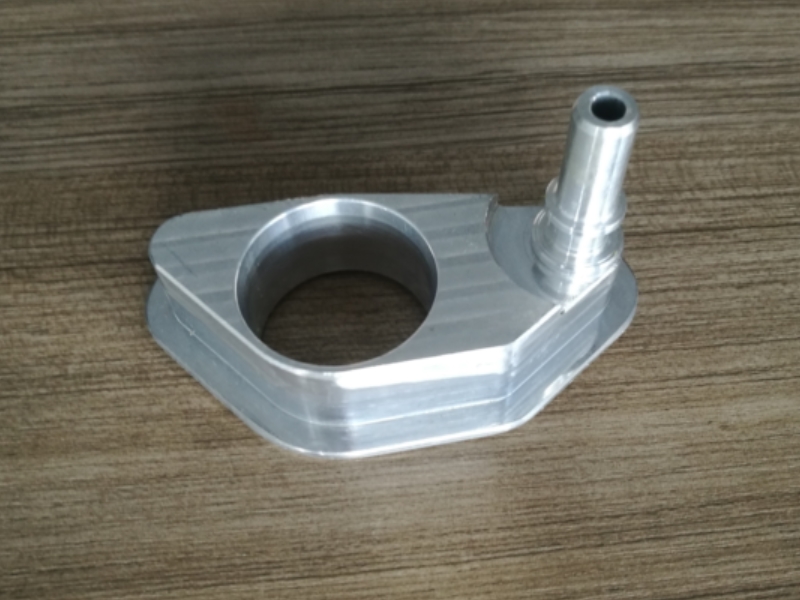
The process starts with the metal insert. Its dimensions, shape, connection features, and installation position need to be defined before production. Aluminum and stainless steel components can be selected according to the application.
Accurate dimensional information is important because the insert must match the mating component and the intended hose configuration.
The silicone material is formed around the metal component during the manufacturing process. SUNRISE uses a curing process in which the silicone material grips the metal insert, creating an integrated hose structure.
This approach can reduce the need for separate connection structures and help simplify assemblies where installation space is limited.
Before approving a custom hose, the finished assembly should be evaluated against the customer's drawings and application requirements. Important considerations include insert positioning, hose dimensions, connection fit, and the operating environment.
For automotive applications, the relevant performance requirements should also be reviewed. SUNRISE states that its metal-insert silicone hose meets or exceeds the requirements of SAE J20 specification.
Custom silicone hoses with metal connections are useful in systems where a flexible hose needs to interface with a rigid metal component. Their applications depend on the hose design, silicone compound, insert material, and performance requirements.
Vehicle engine compartments often contain multiple hoses, pipes, and metal connection points within restricted spaces. An integrated metal insert can help simplify certain connection arrangements and accommodate specific installation geometries.
Depending on the system design, custom silicone hose assemblies may be considered for coolant connections, air intake systems, and other vehicle applications. For conventional cooling and air transfer requirements, SUNRISE also provides custom automotive silicone hoses in different configurations.
Heavy-duty vehicle systems may require customized hose assemblies to accommodate equipment layouts and specific connection interfaces. Integrated metal components can be considered when standard hose couplers do not provide the required connection arrangement.
The insert design, hose dimensions, and material specifications should be evaluated according to the vehicle's operating conditions.
Industrial equipment manufacturers may need non-standard hose configurations to connect silicone hoses with existing metal components. A custom metal insert can help address installation constraints and reduce the complexity of separate connection parts.
For specialized equipment, the design should account for the transferred medium, temperature, pressure or vacuum conditions, vibration, and mechanical loads.
A successful custom hose project starts with clear technical information. Providing the right details helps the manufacturer evaluate the design and determine whether the proposed construction is suitable for the application.
Specify whether the insert should be aluminum or stainless steel. Provide the connection dimensions, mounting position, interface geometry, and any relevant tolerances. If the hose connects to an existing component, a physical sample can also help clarify the design.
Provide the required inner diameter, outer diameter, wall thickness, length, bend angle, and overall shape. The silicone material should be selected according to the operating temperature, transferred medium, and required flexibility.
For applications requiring additional structural support, buyers can also discuss suitable reinforcement options. SUNRISE manufactures reinforced and specially configured silicone hoses for different application requirements.
Temperature, working pressure, vacuum conditions, vibration, and chemical exposure all affect hose selection. Buyers should provide the expected operating range and relevant industry standards so the manufacturer can evaluate the appropriate construction.
Technical drawings, 3D models, or existing hose samples can help communicate the required design. Buyers should also provide estimated order quantities and expected delivery schedules.
For more information about the customization process, see SUNRISE custom silicone hose manufacturing.
SUNRISE SILICONE HOSE CO., LIMITED has specialized in silicone hoses and molded silicone products since 2006. The company provides custom manufacturing solutions for automotive, railway, mechanical equipment, electronics, and other industrial applications.
For silicone hoses with aluminum or stainless steel inserts, SUNRISE can manufacture according to customer-specific designs and connection requirements. The metal insert material can be selected from aluminum or stainless steel, while the silicone structure is formed around the insert during curing.
According to the listed product specifications, the metal-insert silicone hose has the following ordering information:
These specifications are based on the listed product information. Actual pricing, lead time, and order conditions should be confirmed according to the final design and order quantity.
If your project requires a silicone hose with an integrated metal connector, SUNRISE can review your drawings or samples and discuss a suitable manufacturing approach.
Contact SUNRISE to discuss your custom silicone hose requirements, including metal insert material, hose dimensions, connection structure, and application conditions.
A silicone hose with a metal insert is a custom hose assembly that integrates an aluminum or stainless steel component into its silicone rubber structure during curing. It provides a connection interface that can simplify certain equipment and vehicle hose assemblies.
Yes. SUNRISE manufactures custom silicone hoses with aluminum or stainless steel metal components. The design can be developed according to customer drawings, samples, and application requirements.
The listed minimum order quantity for SUNRISE metal-insert silicone hoses is 20 pieces. Buyers should confirm the final MOQ according to the design and production requirements.
The listed lead time for this product is approximately 4–6 weeks. The actual schedule may vary depending on design complexity, component preparation, order quantity, and production arrangements.
Buyers should provide technical drawings or samples, metal insert material, connection dimensions, hose geometry, silicone specifications, operating temperature, pressure requirements, and estimated order quantity. These details help the manufacturer evaluate the project.

Sunrise Silicone Hose Co., Limited


Address : Suite 805, No. 341 Jiahe Road, Xiamen City, Fujian Province, China
Email : sales@siliconehose-china.com