Your silicone hose cost stems from three main drivers: raw materials, manufacturing, and customization. Additional factors like order volume and lead time also affect the quote.
Understand your hose cost from three drivers: materials, manufacturing, and customization. This knowledge helps you budget accurately.
Select the right silicone grade and reinforcement. This choice balances performance and cost.
Order larger volumes and standard sizes. This reduces your per-unit cost.
The raw materials in your custom silicone hose represent the largest portion of the total price. You cannot overlook this factor when budgeting for a project. The base polymer, the additives you choose, and the reinforcement layers all contribute to the final number. Each material decision carries distinct cost implications that affect both performance and longevity.
The purity level of your silicone compound directly determines the silicone hose cost. You face a fundamental choice between two curing systems: platinum-cured and peroxide-cured. Platinum-cured silicone offers high purity with no by-products and extremely low extractables. This premium option costs more because the platinum catalyst itself carries a high price tag. Peroxide-cured silicone, by contrast, uses a cheaper catalyst and leaves volatile organic acids behind unless you post-cure the material. This lower-purity option often appears cloudier and tackier, but it suits many industrial applications.
|
Cure System |
Purity Level |
Cost Impact |
|---|---|---|
|
Platinum-cured (addition cure) |
High purity – no by-products, extremely low extractables/leachables |
Higher cost due to expensive platinum catalyst |
|
Peroxide-cured (free radical cure) |
Lower purity – by-products remain unless post-cured |
More cost-effective; lower catalyst cost |
Your application dictates which grade you need. An automotive coolant line performs perfectly with peroxide-cured silicone. A pharmaceutical fluid transfer line, however, demands platinum-cured material to prevent contamination. Food-grade silicone also requires high-purity compounds with certifications like FDA, USP Class VI, and NSF-51. These certifications add to the manufacturing cost but ensure safety for consumables. You pay more upfront for certified materials, yet you avoid compliance issues and potential liability down the road.
The lifespan difference further justifies the material investment. Rubber hoses last only 3-7 years, while high-quality silicone hoses can endure up to 20 years. This longevity means you replace silicone hoses far less frequently. Production halts and specialist hiring costs from frequent rubber hose replacements quickly outweigh any initial material savings. You should view silicone's higher unit price as a long-term investment rather than a simple expense.
You can modify silicone's properties through various additives and fillers, each affecting the silicone hose cost differently. Silica and fumed silica reinforce the material and enhance mechanical properties. Carbon black adds electrical conductivity. Glass fibers improve structural integrity. Alumina trihydrate provides flame retardancy. These fillers generally cost less than the silicone polymer itself, so incorporating them can reduce your overall material expense.
|
Filler Type |
Price per kg (commodity/reinforcing grade) |
Additional cost for silane coupling agent |
Total cost impact vs. silicone polymer |
|---|---|---|---|
|
Carbon black (N550, N660) |
$1.20–1.80 |
None |
Lower material cost |
|
Precipitated silica (reinforcing grade) |
$2.50–4.00 |
+$0.40–0.80 per kg |
80–120% higher total material cost than carbon black systems |
Using fillers can reduce overall material costs since fillers are often less expensive than the silicone polymer. This makes production more economical, though it may come with trade-offs in performance.
You must balance cost savings against performance requirements. Carbon black offers the most economical reinforcement, but it may not provide the same strength as silica. Higher-density hoses require more raw material, especially when you add significant amounts of fillers. The manufacturing process for these denser compounds also becomes more complex, driving up costs further. However, the improved performance and extended service life often justify the additional expense.
Standard silicone hoses lack reinforcement layers, which keeps their production cost low. Custom reinforced hoses, however, incorporate additional materials necessary for high-pressure and high-temperature applications. These reinforcement layers significantly increase the silicone hose cost, but they enable the hose to perform in demanding environments.
|
Reinforcement Material |
Typical Continuous Operating Temperature Range |
Key Advantages |
Common Applications |
Relative Cost |
|---|---|---|---|---|
|
Polyester |
-54°C to 177°C |
Cost-effective, good flexibility |
Standard automotive coolant/heater hoses |
Low |
|
Aramid (Nomex®) |
-54°C to 260°C |
Excellent high-temperature resistance, vibration fatigue resistance |
Turbochargers, charge air coolers, EGR systems |
High |
|
Fiberglass |
-54°C to 260°C |
Excellent high-temperature resistance |
High-temperature air and fume handling |
Medium |
|
Stainless Steel Wire |
-54°C to 260°C |
Resists vacuum collapse, anti-kink, high pressure |
Vacuum/suction lines, high-pressure applications |
High |
You should match the reinforcement material to your specific operating conditions. Polyester provides an economical solution for standard automotive applications. Aramid offers superior heat resistance for turbocharger systems. Stainless steel wire prevents vacuum collapse in suction lines. Each choice carries a different price point, and you must weigh performance needs against budget constraints.
For demanding applications like data cooling centers, material selection becomes critical. Hose assemblies must withstand high temperature and pressure while resisting corrosion. Stainless steel, PTFE, and specialized polymers offer durability and compatibility with cooling fluids. Higher-grade materials increase expense but provide longer service life and better performance under extreme conditions. Certifications like UL, CSA, and NSF validate reliability, adding to cost but ensuring safety and efficiency. Your material choices directly impact both performance and long-term operational costs.
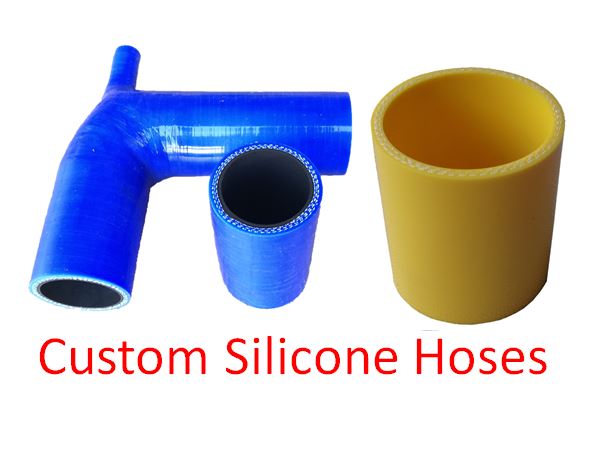
The manufacturing method you choose directly shapes the silicone hose cost. Two primary processes dominate the industry: extrusion and compression molding. Each carries distinct cost implications.
Your choice between extrusion and compression molding significantly affects the silicone hose cost. The table below compares the key cost metrics for these two methods.
|
Cost Metric |
Extrusion |
Compression Molding |
|---|---|---|
|
Tooling Cost |
Moderate (die cost) |
Lower (simpler mold construction) |
|
Per-Unit Cost (High Volume) |
Very low |
Moderate |
|
Per-Unit Cost (Low Volume) |
High (setup costs) |
Low |
Extrusion produces hoses through a continuous process. This method keeps material utilization high and waste minimal. You benefit from lower tooling costs and very low per-unit costs at high volumes. Compression molding, however, uses pre-made molds for each piece. This approach allows high accuracy and consistency. You pay a higher initial tooling cost, but the per-unit cost remains low for small production runs.
The curing process also affects the price. You must apply heat and pressure to vulcanize the silicone. This step consumes significant energy. Compression molding requires per-piece vulcanization, which increases energy consumption and production time. Extrusion, by contrast, uses a continuous curing system that spreads energy costs across many units. The longer the curing time, the higher your production expense.
Labor costs vary with the manufacturing method. Extrusion requires less manual intervention, reducing your labor expense. Compression molding demands more hands-on work for mold loading, part removal, and flash trimming. Quality control adds another layer of cost. You must inspect each hose for dimensional accuracy, surface defects, and material consistency. Certifications like FDA or UL require additional testing and documentation. These steps protect your product quality but increase the final price.
Customization transforms a standard product into a precision component engineered for your specific application. Each modification you request carries its own price tag. The complexity of your design, the volume of your order, and the certifications you require all shape the final silicone hose cost. Understanding these variables helps you make strategic decisions that balance performance with budget.
The dimensions and geometry of your hose represent the most fundamental customization factors. Standard sizes benefit from existing tooling and streamlined production. Custom dimensions require new molds or die modifications, which adds to your upfront investment. You must consider several key customization elements when requesting a quote.
Custom Dimensions and Lengths: Fabricating hoses to exact inner and outer diameters and precise lengths eliminates waste and ensures a perfect fit for specialized equipment. This precision reduces installation errors and extends service life.
Tailored Colors and Finishes: A wide spectrum of colors beyond standard blue and black is available for branding or aesthetics. Finishes range from glossy to matte, each requiring different pigment formulations.
Reinforcement Options: Integrating layers of polyester or aramid fibers increases pressure resistance and structural integrity for rigorous operational stresses. Each reinforcement layer adds material and labor costs.
Material Compounds: Formulating unique silicone compounds enhances properties like higher temperature resistance, chemical inertness, or tear strength for demanding environments. Specialty compounds require additional mixing and testing.
Beyond these fundamental choices, you can specify advanced features that further influence the quote. Custom 3D shapes require tooling for nearly 2,000 existing designs or custom tooling creation for unique specifications. Step down or step up connectors facilitate connection of pipework with different outside diameters for a perfect fit. Integrated heat shields allow positioning as close as 10mm from radiant heat sources. Oil and chemical resistant liners using fluorosilicone or fluorocarbon materials ensure integrity when in contact with aggressive fluids. Branch T connectors attach to coolant or air systems to integrate pressure or temperature sensors. Flanged end fittings handle extremely high pressures and enable quick disconnect for faster OEM assembly. Radial and axial features place small notches for accurate positioning with mating tubes. Controlled axial and radial flexibility integrates humps or rings for easier installation with misaligned tube ends. Printed clamp position guide lines provide visual guidance for correct clamp placement.
Tolerance specifications carry significant cost implications. Standard tolerances of ±0.030 inches suit most applications. Tight tolerances of ±0.010 inches demand more precise tooling, careful process control, and additional inspection time.
Specifying ±0.010″ instead of ±0.030″ adds 60% cost and 5 days lead time to your order.
You must evaluate whether the tighter tolerance genuinely improves your application's performance. In many cases, standard tolerances provide adequate fit and function. Reserve tight tolerances for critical sealing surfaces or precision alignment requirements.
Your order volume directly affects the unit price you pay. Higher quantities spread fixed costs across more units, reducing the per-piece expense. Lower quantities concentrate setup and tooling costs, increasing each unit's price. You should request quotes at multiple volume levels to understand the economies of scale available.
|
Factor |
Setup / Mold Cost |
Per-Unit Cost |
Notes |
|---|---|---|---|
|
Mold complexity (e.g., debossed logo) |
$800–$1,500 (single-cavity); debossed adds $200–$500 |
None (one-time) |
More complex designs increase mold cost; smooth round hose is cheapest. |
|
Screen printing |
$50–$100 per color |
$0.10–$0.30 |
Best for flat surfaces; ink may wear over time. |
|
Pad printing |
$75–$150 |
$0.15–$0.40 |
Good for curved surfaces and fine details; slower on large runs. |
|
Embossing / Debossing |
$200–$500 (mold modification) |
Included in mold cost |
Permanent branding; debossed logos are abrasion-resistant. |
|
Overmolding |
$2,000–$3,000 (machine adjustment) |
$0.50–$1.00 |
Two-tone seamless design; structural silicone lasts product lifetime. |
|
Pantone color matching |
$50–$100 per revision (first two rounds) |
Included in material cost (additional 10–20% for synthetic colors) |
Color can affect silicone fluidity and hardness; factory guarantees Delta E ≤ 2.0. |
Consider a 3,000-piece order to see how these factors combine. A single-cavity mold costs $1,200 one-time. Materials add $1.20 per hose. Labor contributes $0.80 per hose. Screen printing adds $0.15 per hose. Stainless steel fittings cost $0.90 per hose. Packaging runs $0.30 per hose. Quality control and overhead add $0.40 per hose. Ocean freight adds $0.20 per hose. The total unit cost reaches approximately $3.95. After distributor and retail margins, the final price lands near $12. This breakdown demonstrates how order-specific choices directly affect your unit price.
Lead time also influences your total cost. Standard production schedules keep expenses predictable. Expedited timelines disrupt manufacturing flow and require additional resources.
If you're in a rush, expect to pay more. Standard lead times are usually 4–8 weeks. Expedited services may require overtime labor, material rush orders, and higher logistics costs. Planning ahead is the best way to keep costs in check.
You should align your procurement timeline with your project schedule. Early planning allows manufacturers to optimize production runs and secure materials at favorable prices. Last-minute orders force premium pricing for materials and labor.
Industry certifications add another layer of cost to your custom silicone hose. These credentials validate product safety and performance for specific applications. You must determine which certifications your end-use requires before requesting a quote.
Food and beverage applications demand FDA compliance. Medical devices require USP Class VI certification. Potable water systems need NSF-51 approval. Automotive applications may require SAE specifications. Each certification involves testing, documentation, and ongoing quality audits. These compliance activities add to the manufacturing overhead and increase your final price.
You should also consider industry-specific standards. UL certification validates fire resistance and electrical properties. CSA certification confirms safety for Canadian markets. REACH compliance ensures materials meet European chemical regulations. Each standard requires distinct testing protocols and record-keeping procedures.
The certification process extends beyond initial testing. Manufacturers must maintain quality management systems that document material traceability, process controls, and inspection results. These systems require dedicated personnel and software investments. You pay for this infrastructure through higher unit prices, but you gain confidence in product consistency and regulatory compliance.
Your choice of certifications should align with your market requirements. Over-certifying adds unnecessary expense. Under-certifying risks regulatory rejection or liability issues. Work with your manufacturer to identify the minimum certifications needed for your application and target markets.
The silicone hose cost reflects the sum of material selection, manufacturing complexity, customization depth, order volume, and compliance requirements. Each decision you make influences the final quote. By understanding these cost drivers, you can prioritize features that deliver genuine value for your application while controlling unnecessary expenditures.
Your final silicone hose cost combines materials, manufacturing, and customization expenses. Understanding these components empowers you to compare quotes effectively. Request detailed specifications from multiple manufacturers for accurate pricing. Prioritize essential features that deliver performance value. Consider long-term durability over initial expense. This balanced approach ensures you invest wisely in a hose that meets your operational demands.
You can expect to pay between $3 and $15 per unit for most custom silicone hoses. Your final price depends on material grade, reinforcement layers, order volume, and customization complexity.
You can lower expenses by ordering larger quantities, choosing standard sizes, and selecting peroxide-cured silicone when your application allows. You should also consolidate multiple hose designs into fewer specifications to maximize production efficiency.
Standard production typically takes 4 to 8 weeks. You can request expedited service for faster delivery, but you will pay premium prices for overtime labor and rush material procurement.

Sunrise Silicone Hose Co., Limited


Address : Suite 805, No. 341 Jiahe Road, Xiamen City, Fujian Province, China
Email : sales@siliconehose-china.com