When a hose must withstand elevated temperatures and contact with oils or fluids that are not compatible with standard silicone, a conventional silicone hose may not provide the required chemical resistance. Selecting a material based on temperature alone can lead to premature deterioration, leakage, or unexpected maintenance costs.
An
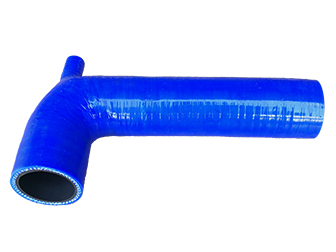
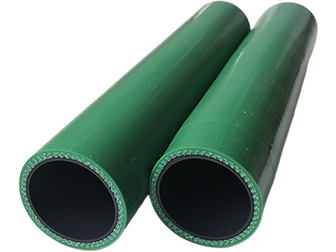
FKM lined silicone hose combines a fluorinated rubber inner lining with a silicone outer body and, in many designs, fabric reinforcement. This construction addresses several performance requirements at once, but the right specification depends on the actual medium, operating conditions, and system design.
Key Takeaways
-
FKM lining can improve resistance to compatible fuels, oils, and selected chemicals compared with standard silicone.
-
The silicone body provides flexibility and thermal performance suited to demanding operating environments.
-
Fabric reinforcement helps maintain hose shape and withstand internal pressure when properly specified.
-
Fluid compatibility, temperature, pressure, and exposure duration must be evaluated together.
What Is an FKM Lined Silicone Hose?
An FKM lined silicone hose is a composite hose designed to combine the chemical resistance of a fluorocarbon elastomer with the flexibility and heat resistance of silicone rubber.
Its construction typically includes three functional elements:
-
FKM inner lining: Forms the fluid-contact surface and acts as a barrier against compatible oils, fuels, and chemicals.
-
Silicone outer body: Provides flexibility and supports operation across a broad temperature range, depending on the compound.
-
Reinforcement layer: Fabric plies help control expansion and maintain structural stability under specified pressure conditions.
Each layer serves a different purpose. The inner lining does not automatically make the complete hose suitable for every chemical, while the silicone body alone does not determine its pressure rating.
For example, SUNRISE offers
FKM lined hose designs for automotive, chemical, and industrial applications, including hydrogen fuel cell systems. Its product information also highlights low volatile content and interlayer adhesion as important considerations for specialized fluid circuits.
What Are the Advantages of FKM Lined Silicone Hoses?
1. Improved Resistance to Oils and Fuels
Standard silicone rubber offers useful flexibility and heat resistance, but it is generally not the first choice for continuous contact with many petroleum-based oils and fuels.
FKM can provide better resistance to many compatible mineral oils, fuels, aromatic compounds, and selected organic chemicals. This makes a lined construction worth evaluating when the fluid-contact surface is exposed to substances that may cause conventional silicone to swell, soften, or lose mechanical integrity.
Potential applications include selected oil return lines, fuel-related circuits, and industrial fluid-transfer systems.
However, compatibility varies with the exact FKM formulation and fluid composition. Fuel blends, additives, and prolonged exposure can change performance. Confirm the specific medium with the hose manufacturer rather than relying on the material name alone.
2. Performance in Elevated-Temperature Environments
Silicone is valued for retaining flexibility across a wide range of temperatures. Combining it with an FKM liner can help address applications where heat resistance and fluid compatibility are both important.
The actual operating limit depends on the silicone compound, lining formulation, reinforcement, pressure, and exposure conditions. The complete hose assembly must be evaluated, including the FKM liner, silicone body, reinforcement, and bonding system.
Engine compartments, heated machinery, and industrial equipment may expose hoses to both elevated ambient temperatures and hot flowing media. Both conditions must be considered when selecting a design.
3. Better Control of Fluid Contact
The inner lining creates a dedicated barrier between the conveyed medium and the silicone body. This can help reduce direct contact between the fluid and the underlying silicone material.
For systems where trace extractables could affect sensitive components, the lining formulation and cleanliness of the finished hose may be important selection criteria.
This is particularly relevant to certain fuel cell cooling circuits, where material compatibility and low levels of volatile or extractable substances can affect system requirements. Low volatile content and low extractables may both matter in sensitive circuits, but they are separate characteristics and should be verified through the applicable test data.
A lined hose should nevertheless be assessed against the cleanliness and compatibility requirements of the specific application.
4. Flexible Routing with Structural Support
A reinforced silicone construction can accommodate routing requirements that rigid tubing may not suit. Fabric reinforcement helps control expansion under pressure, while molded bends and other custom geometries can support installation in restricted spaces.
The final performance depends on reinforcement material, ply count, wall construction, bend radius, and connection design. A flexible hose should not be assumed to tolerate unrestricted bending or high pressure simply because it contains reinforcement.
FKM vs Standard Silicone Hose: Performance Comparison
The key difference is the material exposed to the flowing medium. A standard silicone hose has a silicone inner surface, while a lined version uses FKM at the fluid-contact interface.
Performance Factor
|
Standard Silicone Hose
|
FKM Lined Silicone Hose
|
Heat resistance
|
Generally good, depending on compound
|
Depends on both lining and silicone body
|
Mineral oil compatibility
|
Can offer resistance to mineral oils, depending on the formulation and exposure conditions
|
Can offer resistance to mineral oils, depending on the formulation and exposure conditions
|
Fuel resistance
|
Generally unsuitable for continuous exposure to fuels
|
Better for fuels confirmed compatible with the specific FKM formulation
|
Acid and alkali resistance
|
Depends on the specific acid or alkali, concentration, temperature, and exposure time
|
Can improve resistance to selected acids and alkalis; suitability must be confirmed
|
Chemical compatibility
|
Depends on silicone formulation
|
Can improve compatibility with selected fluids; suitability must be confirmed
|
Flexibility
|
Depends on geometry and construction
|
Depends on the silicone body and reinforcement
|
Pressure capacity
|
Determined by the complete hose design
|
Determined by the complete hose design
|
Relative cost
|
Often lower for comparable basic designs
|
Often higher due to the additional lining
|
These comparisons describe general material tendencies rather than results from a controlled, head-to-head test. Actual performance depends on the formulation, hose construction, operating conditions, and test method.
The lined construction is not automatically superior in every application. If the medium is compatible with standard silicone, a conventional hose may be sufficient. If fuel resistance or resistance to selected acids and alkalis is a critical requirement, FKM lining may provide a more appropriate fluid-contact surface.
Also distinguish FKM from fluorosilicone, commonly abbreviated FVMQ. Although both contain fluorinated chemistry, they are different elastomer families with different performance characteristics. They should not be treated as interchangeable materials.
Where Are FKM Lined Hoses Commonly Used?
Automotive and Commercial Vehicles
Selected oil return, fuel-related, and other fluid circuits may benefit from a lining designed for the conveyed medium. The hose must also withstand engine heat, vibration, movement, and the pressure conditions of its specific location.
Not every fuel line or engine connection is suitable for a silicone-based construction. Alcohol-containing fuels and fuel additives require particular attention, and compatibility must be confirmed for the exact formulation. Check the applicable automotive specification before choosing the material.
Hydrogen Fuel Cell Systems
Certain fuel cell circuits require careful control of material compatibility and extractables. In these applications, the choice of lining may be influenced by fluid chemistry, cleanliness requirements, and the potential effect of released substances on sensitive system components.
The fuel cell hose range emphasizes low volatile content, interlayer adhesion, and reinforced construction. These characteristics should be verified against the requirements of the intended circuit rather than generalized to all fuel cell systems.
Suitability for hydrogen-containing circuits, stack-internal components, or high-pressure hydrogen lines requires separate system-level validation and is not established by fuel-cell cooling-hose documentation alone.
Industrial Equipment and Fluid Handling
Machinery operating near heat sources or handling compatible oils and chemicals may require a flexible hose with a chemically resistant inner surface.
Possible uses include selected oil circulation systems, equipment connections, and specialized fluid-transfer assemblies. For aggressive chemicals, concentrated solutions, or continuous high-temperature exposure, compatibility testing and a documented operating specification are particularly important.
How to Select the Right FKM Lined Silicone Hose
Before requesting a quotation or approving a sample, establish the following parameters.
1. Identify the Exact Medium
Specify the fluid or gas, including its composition, concentration, additives, and any cleaning agents that may contact the hose. State whether exposure is continuous, intermittent, or occasional.
2. Define the Temperature Range
Provide the normal operating temperature, peak temperature, ambient conditions, and duration of heat exposure. Temperature limits should be confirmed for the complete hose assembly.
3. Confirm Working Pressure and Pressure Cycles
State the normal and maximum working pressure, any vacuum exposure, and whether pressure surges occur. Request a rated working pressure and applicable test information for the proposed construction.
4. Specify Dimensions and Geometry
Provide the inside diameter, outside diameter or wall thickness requirements, overall length, bend radius, and connection details. For complex installations, a drawing or sample can help clarify the required shape.
5. Review Reinforcement and Bonding
Ask about the reinforcement material, construction, and relevant dimensional stability requirements. Where the application is sensitive to layer separation, request applicable interlayer adhesion test information.
SUNRISE’s published fuel-cell hose specification reports adhesion exceeding 5,000 N/m, tested in accordance with SAE J20-2006 Section 5.11 and ASTM D413-98 (2017). This applies to the specified product and should not be assumed for every construction.
6. Confirm Compliance and Validation Needs
Identify the relevant customer specifications, industry standards, and testing requirements. A material-level compatibility statement does not automatically demonstrate that a finished hose assembly meets every system requirement.
For application-specific guidance or a custom configuration, contact Sunrise with your operating conditions and dimensional requirements. This information helps determine whether an FKM lined construction is suitable and which details need to be confirmed before sampling.