For most coolant systems, choose standard silicone (60-70 Shore A). For turbo and intercooler applications, select high-temperature wire-reinforced silicone. Vacuum lines require thin-wall silicone. Fuel systems demand fluorosilicone. Your decision hinges on temperature, pressure, and fluid compatibility. This guide helps you choose confidently, whether you consult an automotive silicone hose manufacturer or evaluate specifications independently.
Match your silicone hose to the specific demands of temperature, pressure, and fluid type.
Choose standard silicone for coolant, wire-reinforced for turbo, thin-wall for vacuum, and fluorosilicone for fuel.
Verify SAE or ISO standards compliance to ensure performance and safety.
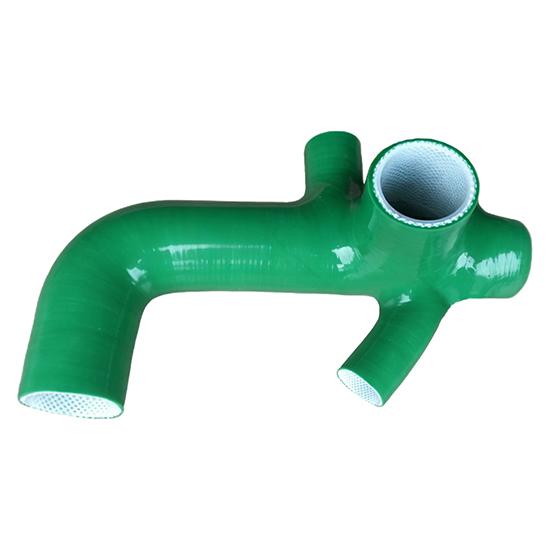
Temperature tolerance separates silicone from rubber more than any other factor. Standard silicone hose handles continuous heat up to 450°F (232°C). High-temperature grades push that limit further. Specialized silicone products operate continuously at 550°F (288°C), with some premium grades rated up to 750°F (399°C). Rubber hoses typically degrade above 250°F (121°C). You will find silicone hoses in engine bays where rubber fails within months.
Pressure ratings tell a similar story. Standard silicone hose withstands moderate pressure in coolant systems. Wire-reinforced silicone handles turbocharger boost pressures that rupture unreinforced rubber. You must match the reinforcement layer to your system's pressure demands.
A high-temperature silicone hose can handle temperatures reaching 550°F. Specialized grades, such as Spiral-Lock Silicone 2P 750, operate continuously at 750°F.
Coolant chemistry affects hose lifespan dramatically. Silicone resists ethylene glycol and water mixtures exceptionally well. Rubber, particularly EPDM, also handles coolant but degrades faster under heat cycling.
|
Aspect |
Silicone Hose |
|
|---|---|---|
|
Recommended for cooling systems |
Yes (high-temperature range) |
Yes (EPDM, general purpose) |
|
Resistance to coolant |
High heat resistance |
Resistant to coolant |
|
Typical service life |
10–15 years |
3–5 years |
|
Cost-effectiveness over long term |
Higher initial cost, lower maintenance |
Lower initial cost, shorter lifespan |
You will replace rubber hoses three times before a silicone hose needs attention. That longevity offsets the higher purchase price.
Initial cost favors rubber. A 1-inch diameter EPDM hose costs approximately $2.15 per foot. The same silicone hose costs $5.70 per foot. That price difference makes rubber attractive for budget builds.
|
Hose Type |
Average Price per Foot (1-inch diameter) |
|---|---|
|
EPDM (Rubber) |
$2.15 |
|
Silicone |
$5.70 |
Performance favors silicone. You gain superior heat resistance, longer service life, and better resistance to ozone and UV damage. For daily drivers, rubber suffices. For performance vehicles or cars you plan to keep for years, silicone delivers better value over time. Calculate your total cost across the vehicle's lifetime, not just the initial purchase.
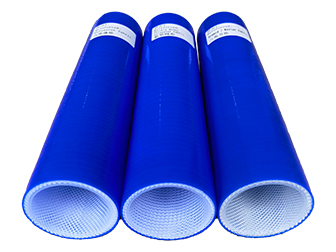
Standard silicone hose serves most cooling system needs. You will find this material in radiator and heater applications. It offers excellent flexibility and resists ozone, UV radiation, and coolant chemicals. The 60-70 Shore A durometer provides a balance between rigidity and conformability. This grade handles continuous temperatures up to 350°F (177°C). Most daily drivers perform reliably with this material.
High-temperature silicone extends your operating envelope. This formulation incorporates specialized heat stabilizers. You gain superior resistance to thermal degradation. Racing applications and high-performance builds demand this grade. The material maintains its structural integrity where standard silicone softens. You will notice reduced hardening and cracking over extended service intervals.
Wire-reinforced silicone hoses handle high-pressure environments. You need this construction for turbocharger and intercooler systems. The embedded wire spiral prevents collapse under vacuum and resists expansion under boost pressure. Multi-layer designs add fabric reinforcement between silicone plies. These layers increase burst resistance without sacrificing flexibility.
Burst pressure varies with hose diameter. Smaller diameters withstand higher pressures. The table below shows typical values for a 4-ply wire-reinforced silicone hose.
|
Hose I.D. (inches) |
Burst Pressure (PSI) |
|---|---|
|
0.500 |
1520 |
|
0.750 |
1260 |
|
1.000 |
1000 |
|
1.500 |
1000 |
|
2.000 |
820 |
|
2.500 |
740 |
|
3.000 |
760 |
|
4.000 |
560 |
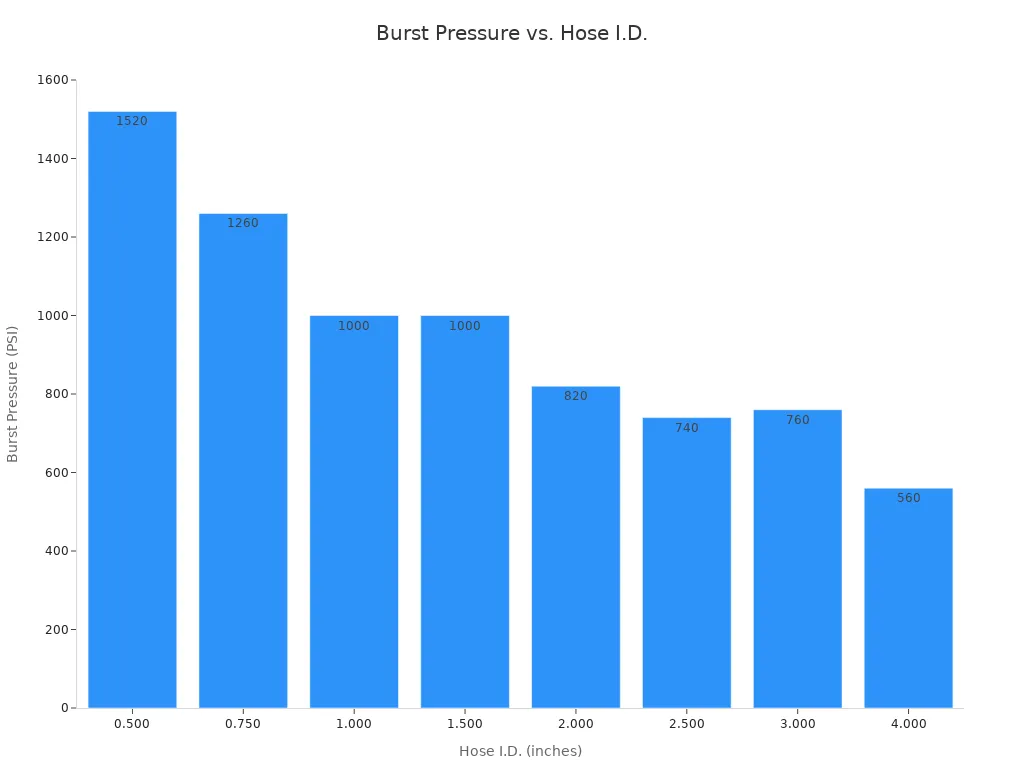
You must match the hose diameter to your system's pressure demands. A 1-inch hose handles 1000 PSI burst pressure. That rating exceeds most automotive applications.
Specialty silicone compounds address specific fluid compatibility challenges. Fluorosilicone resists fuel, oil, and solvent degradation. Standard silicone swells and fails when exposed to petroleum products. You need fluorosilicone for fuel lines and oil cooler connections. This material maintains flexibility across a wide temperature range. Consult a reputable automotive silicone hose manufacturer when your application involves aggressive fluids.
Standards protect you from premature hose failure. They define material properties, construction methods, and performance thresholds. You should verify any hose you purchase meets the relevant standard for your application.
SAE J20 governs coolant and heater hoses in automotive systems. This standard specifies temperature resistance, burst pressure, and fluid compatibility. You will find SAE J20 compliance on most quality silicone radiator hoses. The standard covers both straight and molded hose configurations. It also defines acceptable tolerances for inner diameter and wall thickness. When you select a hose for your cooling system, look for SAE J20 certification.
ISO 2398 addresses rubber hoses for general automotive applications. This international standard covers air, water, and mild chemical transfer. It specifies performance requirements for pressure, temperature, and flexibility. Many manufacturers build their silicone hoses to exceed ISO 2398 requirements. You gain confidence knowing your hose meets globally recognized benchmarks.
SAE J30 applies to fuel and oil hoses. This standard is critical when you select lines for petroleum-based fluids. Standard silicone swells in fuel. You need fluorosilicone or specialty compounds that meet SAE J30 specifications. The standard includes multiple classifications based on construction and performance.
|
Hose Type |
Inner Tube |
Reinforcement |
Cover |
|---|---|---|---|
|
SAE J30 R6 |
Oil-resistant synthetic rubber |
High-strength synthetic yarn (woven) |
Oil-resistant synthetic rubber |
|
SAE J30 R7 |
Oil-resistant nitrile rubber (NBR) |
High-strength polyester fiber (woven) |
NBR and environment-resistant synthetic rubber |
You must match the hose classification to your specific fuel or oil application. Consult a reputable automotive silicone hose manufacturer to confirm the correct SAE J30 rating.
ASTM and DIN standards also apply to silicone hoses. ASTM D380 covers pressure testing methods. DIN 73411 specifies dimensions for silicone hoses in European vehicles. These standards complement SAE and ISO requirements. You should check which standards apply to your vehicle's origin and intended use.
Each automotive system places unique demands on your hose selection. Temperature, pressure, and fluid exposure vary dramatically between locations. You must match the hose construction to the specific environment. This section breaks down the five primary applications and the silicone hose specifications each one requires.
Your cooling system operates within a well-defined temperature window. Most vehicles run between 195-220°F (90-105°C) when warmed up. Newer engines may exceed 220°F (105°C). The ideal temperature for peak combustion efficiency sits around 202°F (94°C).
Normal coolant temperature will be around 195 to 220 Fahrenheit (approx. 90°C) and anything outside of this range can start causing problems.
Standard silicone hose with 60-70 Shore A durometer handles this range with ease. You need a hose that resists ethylene glycol coolant, resists ozone under the hood, and maintains flexibility through heat cycling. The coolant system experiences moderate pressure, typically 12-16 PSI with the radiator cap. Standard silicone construction handles this pressure without reinforcement.
|
Material |
Average Lifespan |
Suitable Applications |
|---|---|---|
|
Silicone |
10+ years |
Racing cars, performance vehicles, heavy-duty trucks, industrial equipment |
You gain a decade of reliable service from silicone coolant hoses. Rubber hoses require replacement every 3-5 years. The silicone hose resists the chemical breakdown that plagues EPDM compounds. You also avoid the hardening and cracking that occurs when rubber exposes to constant heat. For heater hoses, the same standard silicone works well. These lines carry hot coolant to your cabin heater core. They experience similar temperatures but lower pressure. You can use thin-wall silicone for easier routing in tight engine bays.
Turbocharger systems create the most demanding environment for silicone hoses. You face high temperatures, elevated pressure, and oil vapor exposure. The air leaving your turbocharger reaches 300°F at just 15 PSI of boost. Standard silicone cannot handle this combination reliably.
A forum user reports using silicone/rubber tubing on their turbocharged car with no failures at 14 psi, demonstrating that silicone hoses are suitable for boost pressures in the 10-15 psi range.
You need wire-reinforced or multi-layer silicone for turbo and intercooler connections. The embedded wire prevents hose collapse under vacuum. The reinforcement also resists expansion under boost pressure. This construction maintains its shape when you demand maximum performance.
|
Pressure Context |
PSI Rating |
|---|---|
|
Room temperature (general) |
20 to over 200 psi |
|
Operating temperature (250°F) for 3.5"ID x 6"L and 4"ID x 6"L hoses |
Exceeds 65+ psi |
|
Typical low boost (e.g., 15 psi) |
Air temp out of turbo is 300°F, requiring heat-resistant hose |
You must consider both temperature and pressure when selecting turbo hoses. A 4-ply wire-reinforced silicone hose handles the heat and boost pressure of most street and track applications. The hose maintains its integrity even when you push boost levels beyond factory specifications. You also need to verify the hose rating matches your specific turbocharger output. Consult the manufacturer's specifications before installation.
Vacuum lines control critical engine functions. You rely on them for brake boosters, emission control systems, and turbo wastegate actuators. These hoses experience negative pressure rather than positive pressure. The hose must resist collapse under vacuum conditions.
|
Hose Construction |
Safe Vacuum Level |
Collapse Risk |
|---|---|---|
|
Standard 3-ply silicone coupler |
5-10 inHg |
Safe within this range |
|
Unreinforced silicone hose |
10-15 inHg |
Collapses at this moderate vacuum |
|
4-ply or wire-reinforced construction |
20+ inHg |
Recommended for high-performance engines |
|
Dedicated vacuum-rated hose (e.g., spiral-wound steel wire) |
Up to 30 inHg |
Specifically rated for vacuum applications |
You need thin-wall silicone for most vacuum applications. This construction provides adequate collapse resistance for standard engine vacuum levels. Most naturally aspirated engines generate 18-22 inHg of vacuum at idle. A standard 3-ply silicone hose handles this range safely. High-performance engines with aggressive camshafts generate higher vacuum levels. You need 4-ply or wire-reinforced construction for these applications. The reinforcement prevents the hose from collapsing under extreme vacuum. You also gain protection against heat damage in tight engine compartments.
Intake hoses connect your air filter to the throttle body. These hoses carry large volumes of air at varying temperatures. You need a hose that maintains its shape under both vacuum and mild pressure. The intake system experiences temperature fluctuations from cold morning starts to hot engine bay conditions.
Standard silicone hose works well for intake applications. You need a hose with smooth interior walls to minimize airflow restriction. The smooth surface also prevents oil and dirt accumulation. You should select a hose with a durometer rating that maintains rigidity at operating temperature. A hose that softens excessively can collapse under sudden throttle closure.
You also need to consider the hose diameter carefully. Intake hoses must match your throttle body and air filter connections precisely. An undersized hose restricts airflow and reduces performance. An oversized hose creates vacuum leaks. You should measure your existing connections before ordering replacement hoses. Many manufacturers offer universal straight and curved silicone hoses that you can cut to length. You can also order custom-molded hoses for complex routing configurations.
Oil and fuel systems present unique challenges for silicone hoses. Standard silicone swells and degrades when exposed to petroleum products. The silicone polymer absorbs hydrocarbons from the fluid. This absorption causes the hose to expand, soften, and eventually fail. You cannot use standard silicone for fuel lines or oil cooler connections.
You need fluorosilicone for these applications. This specialty compound resists fuel, oil, and solvent degradation. The material maintains its flexibility across a wide temperature range. You also gain the same heat resistance as standard silicone. Fluorosilicone handles continuous temperatures up to 350°F (177°C) without degradation.
You must verify that your fuel hose meets SAE J30 specifications. This standard covers fuel and oil hose construction and performance. The standard includes multiple classifications based on the fluid type and operating conditions. You should consult a reputable automotive silicone hose manufacturer to confirm the correct specification for your application. The manufacturer can recommend the appropriate fluorosilicone compound and construction for your specific fuel type.
You also need to consider the hose fittings and clamps for oil and fuel applications. Standard worm-gear clamps may not provide adequate sealing pressure. You should use constant-tension clamps or AN fittings for these systems. The correct fittings prevent leaks and ensure reliable connections under pressure.
Selecting the correct silicone hose requires a systematic approach. You cannot guess based on appearance or price. Each application demands specific material properties, construction methods, and performance ratings. Follow these five steps to match the right hose to your system.
Temperature determines the base silicone compound you need. You must know the maximum continuous heat your hose will experience, not just the average operating temperature. Measure the actual temperatures in your engine bay rather than relying on estimates.
Recommended measurement tool: An infrared temperature gun (e.g., Extech model with range -58 to 1832°F / -50 to 1000°C) provides the most consistently accurate readings for component temperatures. Use this tool to locate and confirm heat levels when you suspect temperature-related issues.
Under-hood temperatures vary dramatically based on driving conditions. Digital sensor measurements reveal significant differences:
|
Condition |
Front Engine Bay Temp (°C) |
Rear Engine Bay Temp (°C) |
|---|---|---|
|
Moving >40 MPH |
56 |
52 |
|
Moving <40 MPH |
60 |
56 |
|
Stopped, engine off, bonnet closed (immediate) |
80-82 |
80-82 |
|
Stopped, engine off, bonnet open (after 1 hour) |
~50 |
~50 |
|
At rest, engine on, fans on (traffic hold-up) |
70-72 |
66-68 |
The critical finding: under-hood air temperatures reach 80-83°C when the vehicle stops with the bonnet closed. Moving conditions keep temperatures around 60°C. You must account for these peak conditions when selecting your hose material.
Silicone's continuous service ceiling exceeds 350°F (177°C) and can peak above 400°F (204°C) with appropriate formulation. Standard silicone handles most engine bay applications. High-temperature formulations extend your margin when you run forced induction or race applications.
|
Property |
Value |
|---|---|
|
Continuous operating temperature range |
180°C (356°F) to 250°C (482°F) |
You should select a hose rated at least 20°C above your measured maximum temperature. This safety margin protects against heat spikes during heavy load or traffic conditions.
Pressure ratings vary dramatically between automotive systems. You must know both the operating pressure and the potential spike pressure your hose will encounter. Coolant systems operate at relatively low pressure. Turbocharger systems demand much higher ratings.
The typical cooling system pressure in most passenger cars is controlled by the radiator cap, which vents between 13 and 16 psi. The heater hose itself is rated for a working pressure of 50 psi at 212°F, providing a safe margin above the system's operating pressure. Standard silicone hose handles this range without reinforcement.
Turbocharger applications require a different calculation. Pressure rating for silicone hose in turbocharger applications is determined by diameter, wall thickness, and reinforcement. The number and type of reinforcement layers can be adjusted according to the required working pressure, as specified by the manufacturer. You must match the hose construction to your maximum boost pressure plus a safety factor.
For vacuum applications, you need collapse resistance rather than burst resistance. The hose must maintain its internal diameter under negative pressure. Wire-reinforced construction prevents collapse in high-vacuum systems.
Fluid compatibility determines whether your hose survives contact with the media it carries. Silicone resists some fluids exceptionally well. Other fluids cause rapid degradation and failure. You must identify every fluid your hose will contact, including vapors and residue.
Coolant systems present minimal compatibility challenges. Silicone resists ethylene glycol and water mixtures exceptionally well. You can use standard silicone with confidence in radiator and heater applications.
Petroleum-based fluids require special attention. Standard silicone swells and degrades when exposed to these substances:
Motor oil – moderate resistance, but prolonged exposure at high temperatures causes swelling and softening.
Hydraulic fluids – same moderate resistance profile as motor oil, leading to swelling under sustained contact.
Gasoline – classified as an aggressive hydrocarbon solvent that rapidly breaks down the silicone polymer.
Brake fluid – also a hydrocarbon solvent that rapidly degrades silicone, causing swelling and failure.
You need fluorosilicone for any application involving these fluids. This specialty compound resists hydrocarbon absorption while maintaining silicone's heat tolerance. Consult a reputable automotive silicone hose manufacturer when your system carries petroleum products.
Reinforcement and wall thickness determine your hose's pressure capacity and collapse resistance. You must match these construction parameters to your system's demands. Standard silicone hose works for low-pressure applications. High-pressure systems require multi-ply or wire-reinforced construction.
Wall thickness directly affects burst pressure and vacuum resistance. Thicker walls provide greater strength but reduce flexibility. You must balance these factors based on your routing requirements and operating conditions.
The minimum recommended wall thickness for a silicone hose in a turbocharger application is 3.5 mm for multi-ply reinforced silicone hose. Single-layer silicone hose is not suitable for turbo applications; only multi-ply reinforced hoses with a wall thickness of at least 3.5 mm should be used.
For coolant systems, standard 3-ply construction with 3-4 mm wall thickness provides adequate strength. Vacuum lines can use thinner walls since they experience minimal positive pressure. Turbo and intercooler systems demand the thickest walls and most robust reinforcement.
You should also consider the hose diameter when selecting reinforcement. Larger diameters require more reinforcement layers to achieve the same burst pressure rating. A 4-inch hose needs additional plies compared to a 1-inch hose for equivalent performance.
Standards compliance protects you from premature failure and safety hazards. You must verify that your hose meets the relevant industry standards for your application. Certification marks provide visual confirmation of compliance.
SAE J20 governs coolant and heater hoses. This standard specifies temperature resistance, burst pressure, and fluid compatibility requirements. You should look for SAE J20 certification on any radiator or heater hose you purchase.
SAE J30 applies to fuel and oil hoses. This standard includes multiple classifications based on construction and performance. You need the correct SAE J30 rating for any petroleum-based fluid application.
ISO 2398 covers rubber hoses for general automotive use. This international standard provides additional assurance of quality and performance. Many manufacturers build their silicone hoses to exceed ISO requirements.
Beyond these automotive-specific standards, you may encounter additional certifications:
NSF certification: This certification represents a significant milestone for manufacturers, particularly for food-grade and pharmaceutical silicone hose applications.
FDA compliance: NSF certification extends to compliance with FDA regulations, ensuring hoses meet Food and Drug Administration standards for food-contact materials.
You should request documentation from your supplier confirming standards compliance. Reputable manufacturers provide test data and certification documentation upon request. If a manufacturer cannot provide this documentation, you should consider alternative sources.
You need a manufacturer with proven experience in silicone hose production. Look for a facility that controls material formulation in-house. This control ensures consistent quality across every batch. Ask about their sourcing for raw silicone compounds. A manufacturer that tests incoming materials catches problems before they reach your assembly line. Check their production capacity against your volume requirements. A manufacturer that cannot scale with your needs creates supply chain risks. Review their technical support capabilities. Engineers who understand your application provide better recommendations than sales staff alone.
Certifications prove a manufacturer follows established quality systems. ISO 9001 certification indicates consistent manufacturing processes. You should also look for product-specific certifications like SAE J20 compliance. Ask for test data on burst pressure, temperature resistance, and fluid compatibility. A reliable manufacturer provides this documentation without hesitation. They perform routine testing on production runs, not just prototype samples. Third-party testing adds another layer of confidence. You want a manufacturer that validates their own claims independently.
Off-the-shelf hoses serve most standard applications. You can order them immediately and install them without modification. Custom hoses provide advantages when you need specific dimensions, routing, or performance characteristics. Custom options include molded bends, non-standard diameters, and unique reinforcement configurations. The trade-off includes longer lead times and higher minimum order quantities. You should evaluate your volume and application complexity before choosing. A reputable automotive silicone hose manufacturer offers both options and helps you decide based on your specific needs. This flexibility ensures you get the right product for your application without overpaying for unnecessary features.
Silicone hoses outperform rubber, but only when matched to your application. Standards like SAE and ISO guarantee performance and safety. Follow this quick decision matrix:
|
Application |
Hose Type |
|---|---|
|
Coolant |
Standard silicone |
|
Turbo/intercooler |
High-temp wire-reinforced |
|
Vacuum |
Thin-wall silicone |
|
Fuel |
Fluorosilicone |
Always check manufacturer specs and test data. Replace hoses after visible damage or several years of service. Consult a reputable automotive silicone hose manufacturer for guidance.
Silicone hoses last 10 to 15 years with proper installation. Rubber hoses require replacement every 3 to 5 years. Temperature and fluid exposure affect lifespan.
No. Standard silicone swells and degrades with petroleum products. You need fluorosilicone for fuel lines. Verify SAE J30 compliance before installation.
Turbocharger hoses need wire-reinforced or multi-layer silicone construction. This prevents collapse under vacuum. It also resists expansion under boost pressure.

Sunrise Silicone Hose Co., Limited


Address : Suite 805, No. 341 Jiahe Road, Xiamen City, Fujian Province, China
Email : sales@siliconehose-china.com