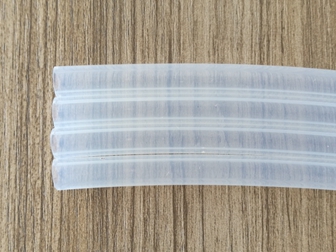
A coffee machine's internal tubing may seem like a minor component, but its material and dimensions can affect beverage quality, equipment reliability, and maintenance. Tubes that are unsuitable for repeated food contact, coffee oil exposure, or actual operating conditions may contribute to leakage, unwanted taste transfer, or connection problems.
For OEM buyers and equipment engineers, selecting the right tubing involves more than finding a flexible silicone tube. Food-contact compliance, temperature suitability, pressure conditions, and dimensional accuracy all need to be considered. This guide explains the main material and performance requirements to help buyers evaluate tubing for coffee machines and replacement applications.
Key Takeaways
-
Food-contact compliance must match the intended use and target market.
-
Coffee oil compatibility should be evaluated separately from general food-contact suitability.
-
Temperature and pressure ratings must match the machine's actual operating conditions.
-
Inner diameter, outer diameter, and wall thickness affect fit and performance.
What Makes Silicone Tubing Safe for Coffee Machines?
The first consideration when selecting
coffee maker silicone tubing is whether the material is suitable for repeated contact with the liquids passing through the machine. Depending on the equipment design, the tubing may carry water, heated water, or brewed coffee. Material selection should therefore account for both regulatory requirements and actual contact conditions.
Food-Contact Compliance
For the US market, FDA 21 CFR 177.2600 addresses rubber articles intended for repeated use in contact with food. It specifies requirements for permitted material components and extraction limits for finished rubber articles. In Europe, Regulation (EC) No 1935/2004 establishes general requirements for materials intended to contact food, including restrictions on the transfer of substances that could endanger health or adversely affect food composition, taste, or odor.
These regulations serve different purposes. REACH addresses chemical substances and restrictions; it should not be treated as a substitute for food-contact compliance. Buyers should check the relevant declarations and supporting documentation for the specific tubing and intended application.
From December 31, 2026, buyers supplying equipment or replacement parts to the EU should also check whether Drinking Water Directive requirements apply to their application, and request the relevant documentation from the supplier.
The SUNRISE coffee maker silicone tubing is BPA-free and compliant with FDA 21 CFR 177.2600, REACH, and Regulation (EC) No 1935/2004. These are relevant considerations for buyers evaluating tubing intended for beverage equipment.
Coffee Oil Compatibility
Food-contact suitability alone does not establish compatibility with every substance that may pass through a tube. Coffee contains oil components, so equipment designers should consider repeated contact with coffee residues as well as hot water.
The tubing compound should be suitable for the actual medium and exposure conditions. Coffee oil resistance is therefore a separate material consideration, not something that should automatically be assumed for every food-grade silicone tube.
For applications involving repeated coffee contact, buyers should look for product-specific compatibility information and supporting test data where available. This helps distinguish general food-contact tubing from products intended for coffee-related applications.
What Performance Requirements Should Coffee Machine Tubing Meet?
A suitable material must also perform under the operating conditions inside the machine. Temperature, pressure, flexibility, and media compatibility should be considered together rather than treated as isolated product features.
Temperature Resistance and Thermal Cycling
What temperature rating should replacement coffee maker tubing have? There is no single rating suitable for every coffee machine. The correct requirement depends on the fluid temperature at the tube's location, how long the tubing remains exposed to heat, and how frequently the machine heats and cools.
For example, a tube carrying water near a heating unit may experience a different thermal environment from one installed farther downstream. Repeated heating and cooling can also influence material performance over time.
Buyers should check the equipment manufacturer's operating conditions and compare them with the tubing supplier's documented temperature range. A general statement that silicone is heat-resistant is not enough to confirm suitability for a particular machine.
The specific coffee maker tubing category does not publish a numerical continuous operating temperature or maximum temperature rating. Buyers should confirm the applicable rating before specifying the tube for a defined thermal cycle.
Pressure and Mechanical Durability
Pressure requirements vary with the machine's design. A tube in a low-pressure water path may have different requirements from one in a pump-driven section of an espresso machine. Pressure fluctuations, connection design, and unsupported tube length can all influence performance.
The most durable silicone tubing for an espresso machine is not necessarily the thickest or most heavily reinforced option. The appropriate construction is the one whose documented pressure capability matches the actual system.
Check the required working pressure and, where relevant, pressure peaks or pulsation. Do not assume that food-contact compliance confirms pressure suitability. The specific product's pressure rating should be obtained from its technical documentation.
Flexibility is another practical consideration. Coffee machines often have compact internal layouts, so tubing may need to follow bends around other components. A flexible tube can simplify routing, but it must not be bent so tightly that the passage becomes restricted or the tube wall is damaged.
How to Choose the Right Silicone Tubing Size for a Coffee Machine?
Even when the material is suitable, an incorrect tube size can create installation and operating problems. For OEM production and replacement applications, dimensions should be checked against the machine's original design rather than estimated from appearance.
Inner Diameter and Outer Diameter
The inner diameter determines the available flow passage. If it is too small, it may restrict flow compared with the equipment's design. If it is too large, the tube may not fit the connector securely.
The outer diameter is equally important because it affects the fit between the tube and its fittings. Buyers should confirm both dimensions and check the connector design before selecting replacement tubing.
Wall Thickness and Bend Radius
Wall thickness affects the tube's overall construction and mechanical behavior. It should be evaluated together with the inner and outer diameters, pressure conditions, and installation requirements.
The bend radius also matters in compact equipment. A tube forced around a tight corner may flatten, kink, or become stressed at the connection. Check the available installation space and the manufacturer's recommended bending limits where provided.
Replacement and OEM Compatibility
When selecting a replacement
silicone tube for coffee machine repair, matching the original dimensions is only the starting point. The replacement must also suit the same fluid, temperature, pressure, and connection conditions.
For OEM buyers, dimensional consistency across production batches is important for repeatable assembly. A tube that fits during initial sampling but varies during production can create installation difficulties and additional quality checks. Confirm the dimensional tolerances required by the equipment design, not just the nominal tube size.
Where Is Coffee Machine Silicone Tubing Used?
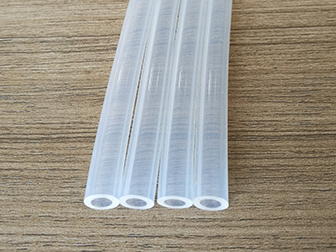
Tubing requirements depend on the equipment's layout and the function of each tube. Home coffee makers, espresso machines, and commercial coffee equipment may use different internal routing, heating arrangements, pumps, and connector designs.
A tube carrying water before heating may face different conditions from one carrying hot water or brewed coffee. In an espresso machine, the pressure conditions of a pump-driven section also need to be considered. Commercial equipment may have different operating cycles and maintenance demands from a machine used occasionally at home.
Even within the same machine, different tube positions can involve different fluid temperatures, pressure conditions, and contact media. A tube suitable for one section should not automatically be assumed suitable for another.
For manufacturers developing coffee equipment or sourcing replacement components, selecting tubing by application is more reliable than choosing by material name alone. The intended fluid path, operating conditions, dimensions, and food-contact requirements should all be checked before a specification is finalized.
With silicone hose and molded silicone product manufacturing experience dating back to 2006,
SUNRISE operates under ISO 9001 and IATF 16949 quality management certifications. Its
coffee maker tubing range is intended for coffee machine applications, with food-contact compliance and coffee oil resistance among the stated product characteristics. Buyers can review the coffee maker silicone tubing p
roduct information when evaluating its suitability for a particular equipment design.
Frequently Asked Questions
How often should coffee machine tubes be replaced?
There is no universal replacement interval for all coffee machines. Follow the equipment manufacturer's maintenance schedule and consider usage frequency, operating conditions, and the condition of the tubing. Machines used frequently may require more regular inspection.
What are the signs that a coffee maker's internal tubing needs changing?
Common warning signs include visible cracks, hardening, swelling, discoloration, deformation, leakage, or loose connections. Changes in flow may also indicate a restriction or internal problem. Inspect the tube and connections according to the machine manufacturer's maintenance instructions.
Can the same silicone tubing be used in every coffee machine?
No. Different machines may require different tube dimensions, pressure capabilities, temperature ratings, connection types, and food-contact properties. Always verify the requirements for the specific machine and installation position before choosing a replacement.